
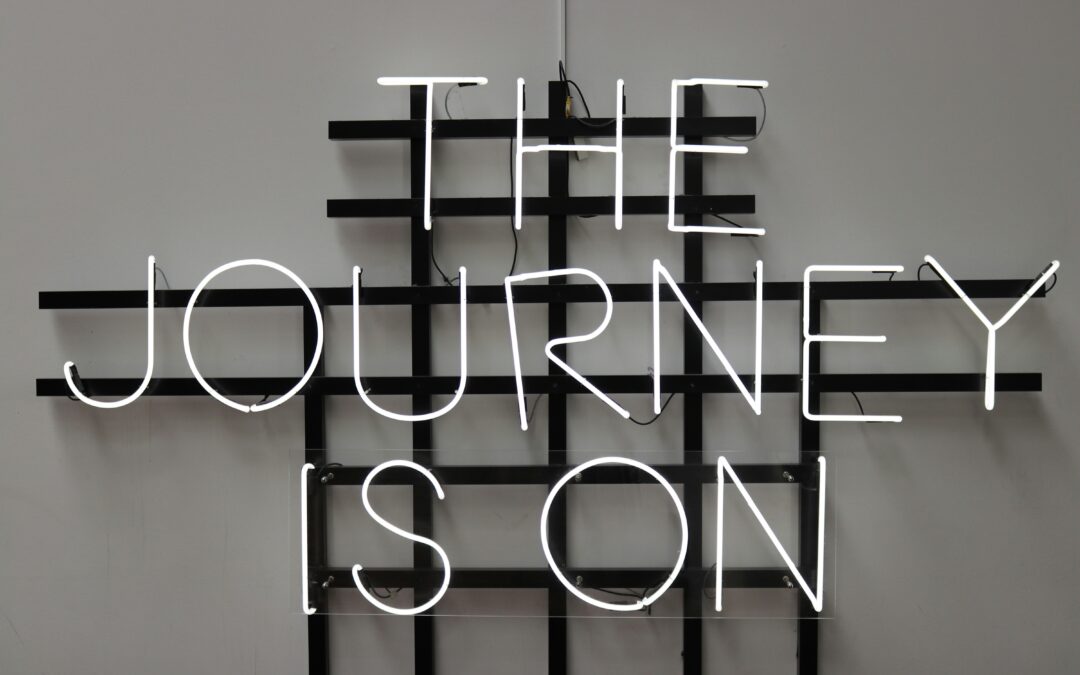
Are you using goal journey design to set and achieve your goals? If that term is new to you, let me introduce the concept.
Goal journey design is the difference between hoping your goals work out and intentionally shaping the experience required to achieve them. It’s the practice of thoughtfully mapping the path your goal must travel—not just naming the destination.
Most of us take planning and strategy seriously in our professional lives. Yet when it comes to our personal or purpose-driven goals, we leave far too much to chance.
At work, we anticipate obstacles before they appear. We plan for complexity. We build in reviews, timelines, and contingencies. When something goes off track, we don’t see it as a personal failure—we see it as feedback.
In our personal lives, we often abandon that mindset entirely.
We Plan Carefully at Work—Then Leave Our Personal Goals to Chance
For many of us, professional life trains us to think strategically. We prepare for meetings, map projects, and consider how today’s decisions affect tomorrow’s outcomes. Planning isn’t optional—it’s expected.
But personal goal planning rarely gets the same respect. Instead, we assume that caring deeply about a goal should be enough. We tell ourselves we’ll figure it out as we go, that motivation will carry us through, or that life will eventually slow down enough to make space for what matters most.
The result is a quiet contradiction: we bring our best thinking to our work and our most hopeful thinking to the part of our lives that should matter most. The goals that mean the most to us are often the ones that receive the least strategic attention.
Goals Don’t Fail Because We Lack Discipline
One of the most persistent myths around goal setting is that unfinished goals reflect weak commitment or poor self-control. When progress stalls, we turn inward and assign blame.
We tell ourselves we couldn’t hack it.
That we didn’t want it badly enough.
That maybe we’re not supposed to achieve our goals.
Here’s the truth: goals often fail because they were never designed to survive real life.
Life is not a controlled environment. It brings competing priorities, unexpected disruptions, emotional fatigue, and seasons of low energy. Without goal journey design, we ask our future selves to push through friction we never anticipated or prepared for. That isn’t a motivation problem—it’s a design problem.
Goal Journey Design Is About Respecting the Process
Designing a goal journey doesn’t mean micromanaging your life or eliminating flexibility. It means acknowledging that every meaningful goal has a process attached to it—and that process deserves attention.
Intentional goal setting shifts the focus away from sheer effort and toward thoughtful preparation. Instead of demanding discipline from yourself later, you ask more humane questions earlier. What will this goal require over time? Where is it likely to become uncomfortable? What kind of support will I need when enthusiasm fades?
I often describe this as creating a goal road map—not a rigid plan, but a thoughtful outline for the journey ahead. One that recognizes the terrain, anticipates obstacles, and gives you something to return to when momentum wanes.
This kind of reflection doesn’t make goals rigid. It makes them realistic.
Why Wholistic Productivity Starts Before You Begin
When goals rely entirely on willpower, they become fragile. They demand constant emotional effort and eventually begin to compete with the rest of life rather than fit within it. That’s often when people conclude they simply aren’t disciplined enough—when the real issue is that the goal was never designed to coexist with everything else that matters.
This is where wholistic productivity changes the conversation. Instead of asking how to do more, it asks how goals can be pursued in a way that honors your professional responsibilities, personal well-being, and sense of purpose at the same time.
Well-designed goals don’t require you to sacrifice one area of life for another. They acknowledge limits, rhythms, and seasons. They create space for progress without demanding perfection. When goals are designed with the whole person in mind, consistency becomes less about pressure and more about alignment.
From this perspective, productivity isn’t measured by how much you accomplish in a day. It’s measured by whether your goals are sustainable across the full landscape of your life. And that kind of productivity doesn’t begin with effort—it begins with design.
Achieving Long-Term Goals Is an Experience, Not a Moment
We often talk about goals as if they are single decisions—the moment we commit or the day we start. But achieving long-term goals is an experience that unfolds over time. It includes uncertainty, repetition, doubt, small wins, and necessary course corrections.
When we define only the destination and ignore the journey, we leave ourselves unprepared for what happens between intention and outcome. Designing the journey doesn’t guarantee success, but it dramatically improves our ability to stay engaged when progress feels slow or invisible.
Designing Your Goal Journey Is an Act of Stewardship
You already know how to plan. You already know how to think strategically. The real question is whether you believe your personal goals are worthy of that same level of care.
Goal journey design isn’t about perfection or control. It’s about stewardship. It’s about choosing to stop leaving your most meaningful goals to happenstance and starting to treat them like the important commitments they are.
Not because you want to optimize your life—but because you want to live it with greater intention.
A Question to Sit With
Before moving on, consider this: where have you relied on motivation to do the work that thoughtful design could have done for you?
You don’t need to overhaul your life today. What you need first is a different way of thinking about your goals—one that makes goal journey design possible.
If you want to be more intentional about designing your next goal journey, I’d love to talk with you. You can schedule a free 20-minute strategy call to discuss your goals and how to design them for real life.