
I did not expect a reality TV show to give me one of my best productivity insights of the year. And yet, here we are.
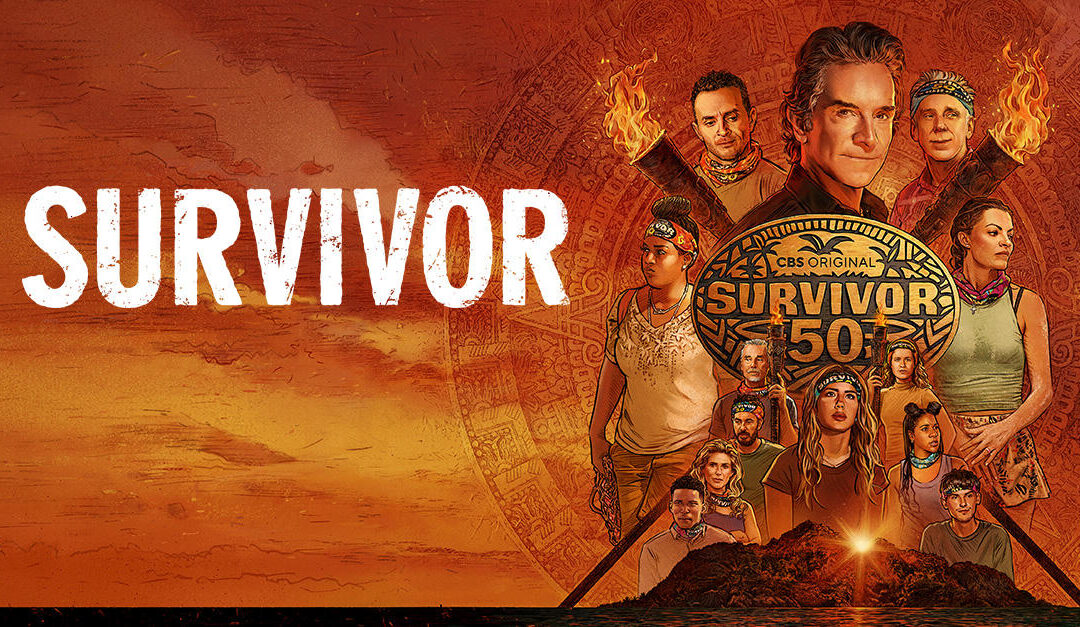
My son and I watched the Survivor Season 50 finale together last week. He’s almost 21 and is currently working his way through all 50 seasons — living his best life, honestly.
Season 50 was a milestone, bringing back fan favorites from the show’s 25-year history, including Jenna from the original Borneo cast all the way through players like Savannah and Rizo, who had literally just finished filming Season 49 before jumping straight into Season 50.
But what really caught my attention wasn’t the physicality of the challenges or the drama of tribal councils. It was watching old-school players go up against new-era players and realizing how much the game had changed.
The Game That Changed the Rules of Adaptability and Productivity
In the early seasons — roughly Seasons 1 through 20 — Survivor rewarded a specific kind of player. Build a stable alliance early. Don’t stand out. Manage threats quietly. Let the game come to you. A lot of those winners emerged late after playing patient, almost invisible games.
Modern Survivor is a completely different animal. Now the game rewards situational awareness, immediate jury management, emotional regulation under uncertainty, and what I’d call “selective risk-taking.” The social game still matters, but the question shifted from “did people like you?” to “did people respect your game while still liking you enough to hand you a million dollars?”
Neither era is better. They were both right for their environment.
When the Environment Changes, the Strategy Has to Change Too
Survivor, as it turns out, maps surprisingly well onto personal growth strategies and real life. Because what the show’s evolution unknowingly demonstrates is this: the strategy that creates success changes when the environment changes.
That’s the real lesson. Not just “be flexible” — though yes, also that. It’s that clinging to a strategy that worked in a different season of life can quietly become the thing holding you back.
Here’s what I mean. A lot of productivity advice was built for a more stable world. A world with predictable schedules, linear career paths, and boundaries between work and everything else. In that world, the old-era approach worked beautifully: build the perfect system, stick to the plan, measure success by consistency, and push harder when things go sideways.
But modern life looks a whole lot more like new-era Survivor. Constant information overload. Shifting priorities. Unexpected disruptions on a Tuesday afternoon. Emotional fatigue from decisions that never seem to stop. Changing technology that rewrites the rules every six months.
Trying to apply a rigid, fixed five-year plan to that environment isn’t discipline. It’s just a flexible productivity system pretending it doesn’t need to flex.
A Flexible Productivity System Built for Real Life
This is where you want to focus your time and energy. Not the chaos of pure reactivity, and not the rigidity of an over-optimized routine that falls apart the moment life interrupts. (And life will interrupt. That is its job.)
The goal is to be grounded but adaptive. Intentional but flexible. Build systems that expect disruption instead of running from it. Recover intelligently instead of white-knuckling your way through a plan that stopped working three weeks ago.
Because here’s what Survivor’s most successful players across every era have understood: it was never really about mastering the rules of the game. It was about understanding people, energy, relationships, timing, when to press and when to wait.
The people who thrive long-term in life aren’t usually the most optimized or the busiest. They’re the ones with self-awareness, emotional intelligence, and the wisdom to know which season they’re actually in.
How to Adapt to Change Without Losing Yourself
Here’s a question worth sitting with: Are you using an old-era strategy in a new-era season of your life?
Maybe you built your identity around a system that used to work — the early mornings, the rigid schedule, the five-year roadmap. And maybe that system served you well for a long time. But if the environment around you has shifted, and you’re still forcing the old approach, that’s not strength. That’s just inertia wearing the costume of discipline.
Learning how to adapt to change doesn’t mean abandoning your goals or your values. It means building systems that leave room for you to evolve. The healthiest goal-setting strategies aren’t the ones built around “this is who I must always be.” They’re the ones that ask, “Who do I need to be right now and what does this season require of me?”
Fifty seasons of Survivor. Twenty-five years of watching one game evolve into something almost unrecognizable from where it started.
Your story has seasons too. Make sure your strategy knows which one you’re in.